

Start Your Free Trial Today Sign Up Here
Need to get started? Purchase Here
What Is Gavel Buddy?
Auction Management Software (Replace Clerking Tickets)
Gavel Buddy was designed by an auctioneer with a software development background to help his family business save money and become more efficient. Paper tickets were inefficient, error prone, and created additional stress on the auction staff when reconciling buyer and seller totals. After many successful years of using Gavel Buddy for his families auction business, he decided to make it available for other auction companies to benefit from.
Online Auction Software (Take your auctions online)
Online auctions continue to gain popularity all the time. Gavel Buddy can create you your own website for you to manage and conduct online only, webcast, and pre-bid auctions. Sellers love the idea of an online auction due to the additional exposure for their merchandise. Bidders love the idea of online auctions for the convienience of being able to bid from home, work, phone, tablet, etc...Very Simple

Gavel Buddy is simple, and intuitive. Takes very little training. Easy for anyone to grasp in a very short amount of time (minutes). Simple for your staff, bidders, and sellers. Software is not bloated with functionality you will never use. Networking computers is simple and reliable. We install/configure the software for you!
Pays For Itself

Helps eliminate costly clerking/cashiering mistakes. Shorter bidder lines. Time saved is money saved.
It Just Works

Gavel Buddy has a great reputation for providing auction companies a solution that consitantly works and quickly addressing issues if/when necessary.
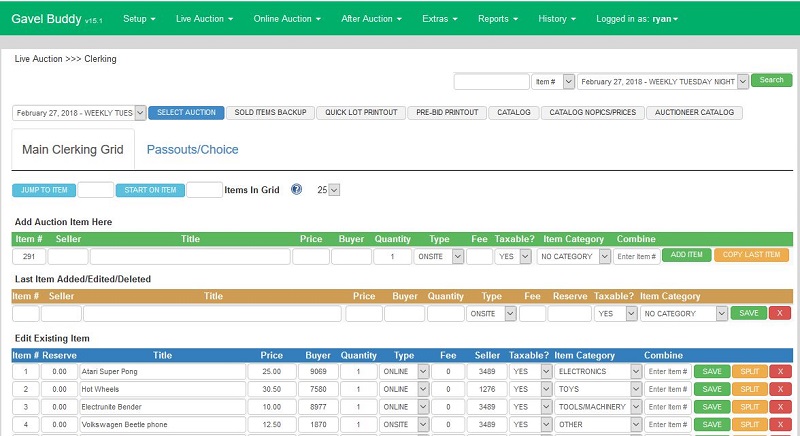
Clerking an Auction
Clerking has never been easier. Sell items "pre-cataloged", "on the fly", or both! Easily add, revise, or delete items throughout the sale. Navigate the auction catalog with ease! Saving time, limiting mistakes.
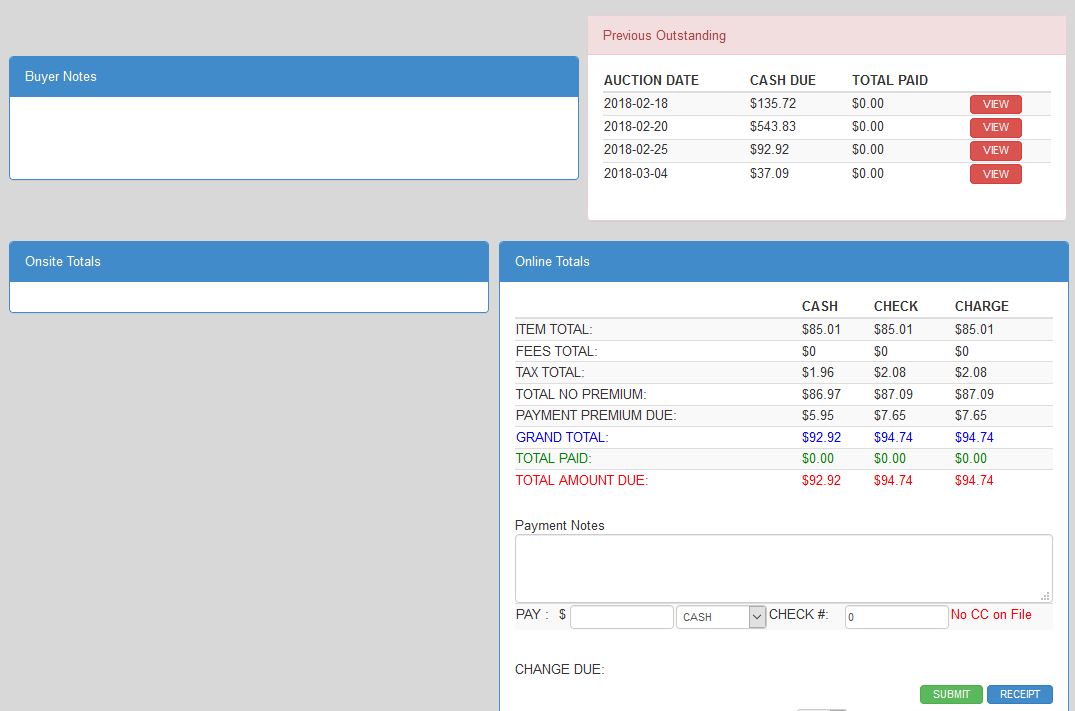
Cashiering an Auction
Cashering an auction is very intuitive. Items clerked on the block are immediatly available to your cashier. Checkout takes "seconds" instead of "minutes". Cashier is alerted if a bidder has a balance due from a previous auction.
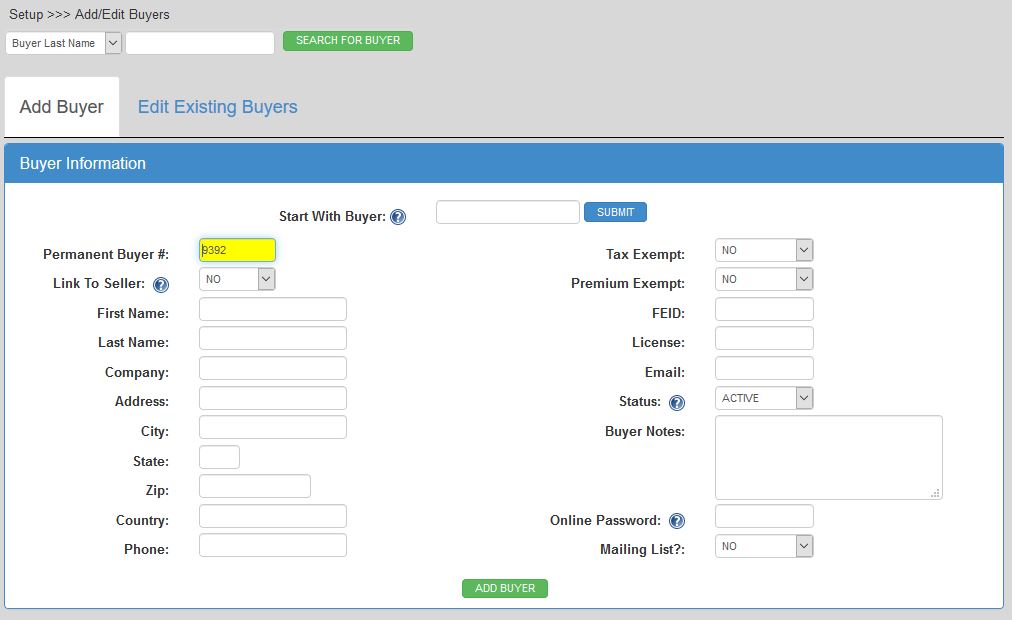
Bidder Management
Checking bidders in is extremely fast. Limit the long lines at your auction. User permanent bidder numbers, new numbers, or both! Add the optional drivers license scanner to make checking in lighting fast and accurate.
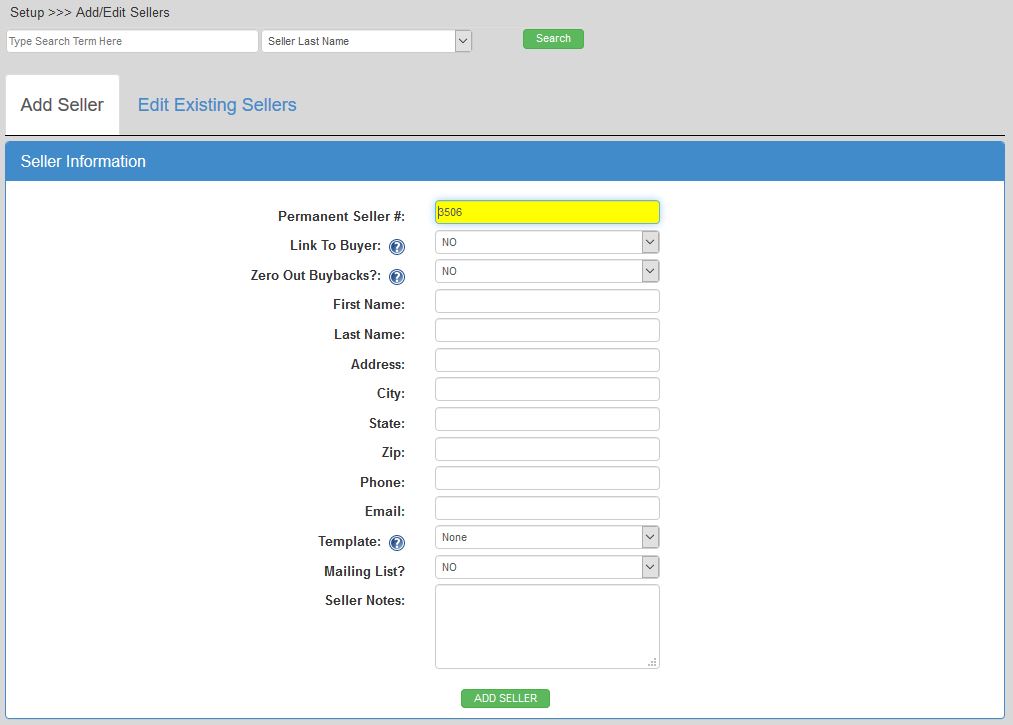
Seller Management
Seller commission rates and fees are very flexible. Define your own fee types, commission steps, and seller communication options. Seller commission rates can be setup prior to an auction. Calculates on the fly. Print checks.
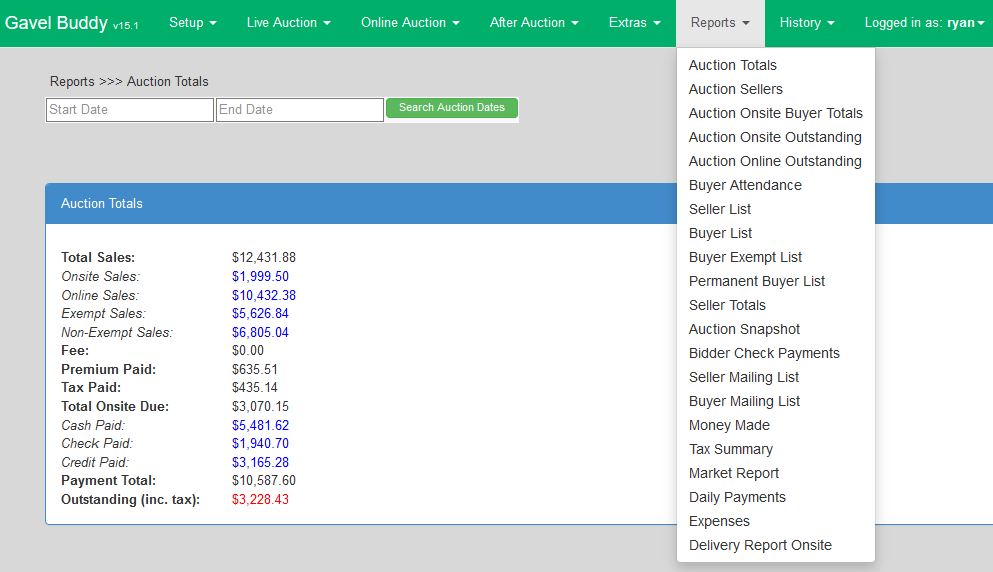
Reporting
Knowing your numbers is very important. Gavel Buddy has numerous reporting options to assist in tracking bidder totals, auction totals, seller totals, expenses, and much more. Custom report development is also available.
Looking For More Information? Have a Look Here

Basic Web\Standalone Features (Clerking Software)
- Our software is very user friendly. Anyone with basic computer knowledge can comfortably use Gavel Buddy.
- Tracks outstanding balances for bidders from previous auctions
- Checking bidders in and checking bidders out has never been easier or faster.
- Multiple options are available for paying sellers.
- Driver's license scanners are available.
- It's VERY Fast - All entries in Gavel Buddy are instantaneous. Your customers no longer have to wait to cashout.
Basic Online Features (Online Auctions)
- Conduct online only, live webcast, accept pre-bids, and more all from your own auction website! We develop the site and you manage it all from within the Gavel Buddy software.
- Maximum Exposure - Bidders from all over the Country will be able to bid on your merchandise. Live, online only, or pre-bids.
- Maximum Exposure - Bidders from all over the Country will be able to bid on your merchandise. Live, online only, or pre-bids.
- Online Presence - By having your own website, you will effectively be able to communicate news and updates to your bidders and sellers as well as offer multiple bidding options.